
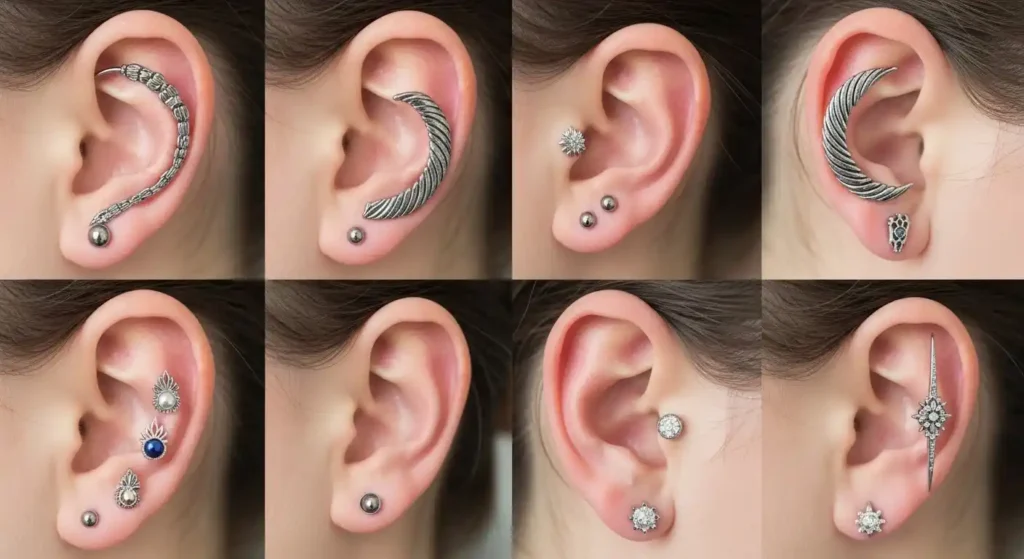
So you’ve finally gotten that conch piercing — or you’re seriously thinking about it. Either way, one of the first things you want to know is: how long does this actually take to heal, and what will it look and feel like along the way?
Last updated: June 9, 2026
Understanding the conch piercing healing stages helps you stay calm when things feel weird, and it helps you catch real problems early. Let’s walk through everything honestly and practically.
What Is a Conch Piercing?
The conch is the large, flat cartilage area in the middle of your ear. There are two types — the inner conch (closer to the ear canal) and the outer conch (closer to the rim). Both are popular choices, and both take a similar amount of time to heal.
Because cartilage doesn’t have the same blood supply as soft tissue, healing takes noticeably longer than a lobe piercing. That’s just the reality of cartilage work, and it’s important to set expectations from day one.
The Conch Piercing Healing Stages Explained
Healing doesn’t happen all at once. It moves through distinct phases, and knowing each one makes the whole journey far less stressful.
Stage 1: The Inflammatory Phase (Weeks 1–3)
Right after getting pierced, your body immediately responds as if it’s been injured — because technically, it has. During this first stage, you’ll notice:
- Redness and warmth around the piercing
- Some swelling and tenderness
- A small amount of clear or slightly yellowish fluid (lymph fluid)
- Occasional throbbing, especially in the first few days
This is completely normal. Your immune system is doing exactly what it’s supposed to do. The jewelry will likely feel tight because of swelling, and moving it will sting.
Don’t panic during this phase. Don’t over-clean it either. Twice a day with a sterile saline solution is enough.
Facebook Site Not Working? Here’s How to Fix It
Stage 2: The Proliferative Phase (Weeks 4–12)
By week four or so, things start to calm down noticeably. The intense swelling fades, and the pain becomes much more manageable. This is when new tissue starts forming around the jewelry — a process called granulation.
During this stage, you might notice:
- A thin crust forming around the jewelry (this is dried lymph fluid, not pus)
- The channel starting to feel more stable
- Occasional itching — which is actually a positive sign of healing
- Possible formation of a small bump (more on that later)
The bump that some people develop during this stage is often a granuloma or an irritation bump. It looks alarming, but it usually goes away once you remove whatever’s irritating the piercing — whether that’s low-quality jewelry, sleeping on it, or aggressive cleaning.
Stage 3: The Maturation Phase (Months 3–12+)
This is the long game. The tissue continues to strengthen and tighten around the jewelry. Even when a conch piercing looks healed on the outside, the inside of the channel is still maturing.
Signs you’re in this stage:
- Very little to no discharge
- No redness or swelling under normal circumstances
- The jewelry sits comfortably without shifting much
- You can gently clean around it without it hurting
Most piercers say a conch piercing is fully healed somewhere between 6 and 12 months. Some people take even longer. Rushing this stage is one of the biggest mistakes people make.
How Long Does a Conch Piercing Take to Heal?
On average, expect 6 to 12 months for a full heal. Some people with excellent aftercare and healthy immune systems get there closer to the 6-month mark. Others — especially those who sleep on that side, sweat heavily, or work in dusty environments — can take well over a year.
The honest answer is: it varies. Listen to your body and check in with your piercer if you’re unsure.
Pros and Cons of Getting a Conch Piercing
Before we go further, here’s a quick honest breakdown:
Pros:
- Stunning aesthetic that works with flat studs or hoops
- Versatile — suits nearly every ear shape
- Less visible than a helix, great if you need something subtle
- Long-lasting once healed
Cons:
- Long healing time compared to lobe piercings
- More sensitive to irritation and pressure
- Higher risk of bump formation if aftercare slips
- Sleeping on it’s uncomfortable for months
Common Mistakes During Conch Piercing Healing
A lot of people unintentionally slow their own healing. Here are the most common slip-ups:
1. Touching it with unwashed hands. This introduces bacteria directly to an open wound. It sounds basic, but it’s the number one issue piercers see.
2. Over-cleaning. More is not better here. Cleaning more than twice a day strips the natural moisture barrier and irritates the channel. Stick to saline, twice daily.
3. Sleeping on the piercing. Pressure and friction from your pillow are a nightmare for cartilage healing. A travel neck pillow or a donut-shaped piercing pillow can make a huge difference.
4. Changing jewelry too soon. Even if it looks healed at three months, the internal tissue isn’t ready. Changing jewelry early can cause tears, introduce infection, and set healing back by weeks.
5. Using harsh products. Alcohol, hydrogen peroxide, and antibacterial soap are all too aggressive for a fresh piercing. They kill the healthy cells your body is trying to build.
6. Rotating the jewelry. This old-school advice is outdated and actually harmful. Rotating jewelry disrupts the forming tissue. Leave it alone.
Best Practices for Faster, Smoother Healing
Here’s what actually works:
- Use sterile saline spray (like NeilMed Wound Wash) twice a day. Spray and let it air dry.
- Keep hair products, makeup, and perfume away from the piercing — even incidental contact adds up.
- Stay consistent with aftercare even when it looks fine. The channel is still building internally.
- Eat well and stay hydrated. Your body heals faster when it’s well-nourished.
- Wear quality jewelry from day one. Implant-grade titanium, solid gold (14k or higher), or implant-grade steel are your best options. Avoid mystery metals.
- See a professional piercer if something seems off. Don’t try to self-diagnose a potential infection through Reddit.
How to Tell If Your Conch Piercing Is Infected
Irritation and infection are not the same thing, and this distinction matters a lot.
Irritation looks like: a small bump, mild redness, clear or white crust, minor soreness.
Infection looks like: significant spreading redness, hot skin around the area, green or yellow pus with an odor, fever, or swollen lymph nodes.
If you’re seeing signs of actual infection — not just irritation — go to a doctor. A professional piercer can also assess it, but if you’re running a fever or the redness is spreading, that’s a medical situation.
Conclusion
Getting a conch piercing is exciting, and with the right mindset and aftercare, it’s a smooth experience. The key is patience. The healing stages move at their own pace, and trying to rush them almost always creates setbacks.
Respect the process, keep your hands clean, sleep smart, and invest in quality jewelry from the start. Your piercing will reward that effort with a beautiful, stable result that lasts for years.
If you’re ever unsure about something during healing, your piercer is always your first call — they’ve seen it all and can give you real, personalized guidance.
Frequently Asked Questions
1. How long do conch piercing healing stages typically take in total?
Most conch piercings take between 6 and 12 months to fully heal, though individual timelines vary based on aftercare, lifestyle, and overall health.
2. Is it normal to have a bump during the healing stages?
Yes, irritation bumps are common, especially in the early to middle stages. They usually resolve once the source of irritation is removed. Persistent or painful bumps should be assessed by your piercer.
3. Can I swim while my conch piercing is healing?
It’s best to avoid pools, hot tubs, and open water during the first few months. These environments introduce bacteria and chemicals that can seriously disrupt healing.
4. When can I change my conch piercing jewelry?
Wait at least 6 months before attempting a jewelry change, and ideally have your piercer do it for you the first time to avoid damaging the channel.
5. What’s the best jewelry material for a healing conch piercing?
Implant-grade titanium is widely considered the gold standard. It’s lightweight, hypoallergenic, and available in a range of colors through anodization. Solid 14k gold and implant-grade steel are also solid choices.
Source: Vogue
Related Articles
- Unblocked Games Classroom 6x: The Ultimate 2026 Guide
- 25 Small Business Ideas to Start in 2026
- Pasonet: The Smart Network Backbone Powering Modern Digital Growth
Editorial Note: This article was researched and written by the Floral Loft SAC editorial team. We fact-check our content and update it regularly. For questions or corrections, contact us. Knowing how to address conch piercing healing stages early makes the rest of your plan easier to keep on track.