Introduction
If you’ve ever pulled potatoes out of the pot too early — or left them in so long they turned to mush — you know how frustrating it can be. How long do you boil russet potatoes? The honest answer is: it depends on what you’re making. Whole russets take longer than cubed ones, and what you’re cooking them for matters too. Whether you’re making mashed potatoes, potato salad, or a hearty soup, getting the timing right makes all the difference. This guide walks you through everything you need to know to nail it every single time.
Last updated: June 9, 2026
What Makes Russet Potatoes Different?
Russet potatoes are starchy, thick-skinned, and fluffy on the inside when cooked. That high starch content is exactly why they’re the go-to choice for mashed potatoes and baked dishes. But it also means they can fall apart quickly if you overcook them.
Unlike waxy potatoes — which hold their shape well in boiling water — russets absorb water fast. That’s great for creamy mashes, but it means you need to keep a close eye on the clock.
How Long Do You Boil Russet Potatoes?
This is the core question, and here’s a straightforward breakdown:
Whole russet potatoes (medium-sized):
- 30 to 40 minutes in boiling water
Cubed russet potatoes (1-inch pieces):
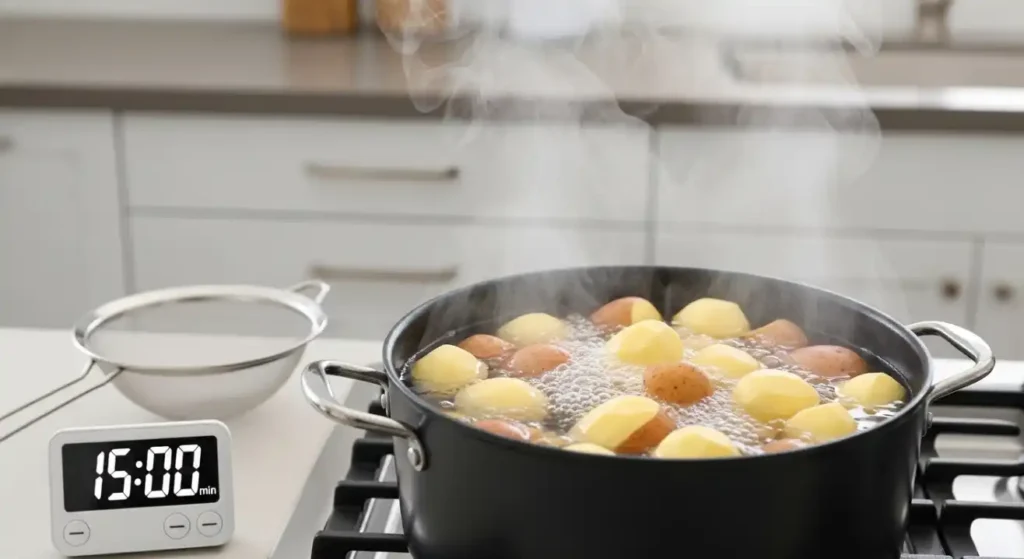
- 12 to 15 minutes in boiling water
Small whole russets or baby russets:
- 20 to 25 minutes
Sliced russet potatoes (½-inch rounds):
- 8 to 12 minutes
Always start with cold water and bring the potatoes to a boil together. This ensures even cooking from the inside out. If you drop potatoes into already-boiling water, the outside cooks too fast while the center stays raw.
Step-by-Step Guide to Boiling Russet Potatoes
Step 1: Prep Your Potatoes
Rinse them well under cold water. Scrub off any dirt. Decide whether you’re peeling them — for mashed potatoes, most people peel first. For potato salad, some cooks boil them with the skin on, then peel after.
Cut them into even pieces if you’re not boiling whole. Uniform sizes matter because uneven chunks cook at different rates.
Step 2: Add to Cold, Salted Water
Place your potatoes in a pot and cover with cold water by about an inch. Add a generous pinch of salt — this seasons the potatoes from the inside as they cook, not just on the surface.
Step 3: Bring to a Boil, Then Reduce
Bring the water to a full rolling boil over medium-high heat. Once it’s boiling, reduce to a steady simmer. A hard boil the entire time can cause the outside of the potato to break apart before the inside is done.
Step 4: Test for Doneness
Don’t just rely on the timer. Use a fork or a thin knife and pierce the thickest part. If it slides in with no resistance, they’re done. If there’s any firmness, give them another 2 to 3 minutes and test again.
Step 5: Drain Immediately
Once done, drain them right away. Leaving potatoes sitting in hot water continues cooking them — and you’ll end up with waterlogged, mushy results.
Operational Protocol: The Complete Guide to Getting It Right
Boiling Times by Use Case
Different recipes call for different textures, so it helps to think about what you’re making before you set that timer.
For mashed potatoes: Boil cubed russets for 15 to 18 minutes. You want them very tender — almost falling apart — so they mash smoothly.
For potato salad: Aim for just tender, not mushy. About 12 to 14 minutes for cubed pieces works well. They should hold their shape when tossed with dressing.
For soups and stews: If you’re adding them directly to a simmering soup, cubed russets typically need 15 to 20 minutes depending on the size.
For twice-baked or stuffed potatoes: Boil whole for 25 to 30 minutes until just tender, then finish in the oven.
Pros and Cons of Boiling Russet Potatoes
Pros
- Simple and fast, no special equipment needed
- Even cooking when done correctly
- Great base for many recipes — mash, soups, salads
- Brings out the fluffy, starchy texture russets are known for
- Easy to season during cooking with salt and herbs
Cons
- Easy to overcook — russets fall apart quickly
- Waterlogged texture if left in water too long after draining
- Nutrient loss compared to steaming or roasting
- Requires attention — unlike roasting, you can’t just walk away
Common Mistakes People Make
Even experienced home cooks slip up with boiled potatoes. Here are the most common errors to avoid:
Starting with boiling water. Always begin with cold water and the potatoes in together. How Long Do You Boil Russet Potatoes Perfectly gives you more even, controlled cooking.
Skipping the salt. Unsalted water produces bland potatoes, no matter how much you season afterward. Salt the water generously — it should taste faintly like the sea.
Cutting unevenly. If some pieces are twice the size of others, the small ones turn to mush before the big ones are done. Take an extra minute to cut uniform pieces.
Not testing before draining. Timers are a guide, not a guarantee. Potato size, altitude, and your stove’s heat all affect cooking time. Always test with a fork.
Leaving them in the water. Once you drain them, get them out of the pot. Residual heat and steam keep cooking the potatoes even after the water is gone. Spread them out or let them sit uncovered in the empty hot pot for a minute to steam off excess moisture.
Best Practices for Perfect Boiled Russet Potatoes
Follow these tips and you’ll get consistent results every time:
- Use a pot big enough so potatoes aren’t crowded. Crowded potatoes cook unevenly.
- Add a splash of vinegar to the water if making potato salad — it helps the potatoes hold their shape a little better.
- Keep the simmer gentle once boiling begins. A rolling boil beats up the outside of the potato.
- Warm your dairy before mashing. Cold butter or milk cools down your hot potatoes and leads to a gluey texture.
- Taste as you go. Pull a piece out and try it. Your palate is the best tool in the kitchen.
- Match the potato size to the dish. Bigger chunks for stews, smaller cubes for quick sides.
Conclusion
Boiling russet potatoes really doesn’t have to be complicated. The key is understanding that size determines time, and your goal — mash, salad, or soup — determines how soft you want them. Start in cold, salted water. Bring to a boil, reduce to a simmer, and always test with a fork before draining. Get those basics right, and you’ll have perfectly cooked russet potatoes every time. Once you’ve nailed the timing, it becomes second nature — and your dishes will be noticeably better for it.
Frequently Asked Questions
1. How long do you boil russet potatoes for mashed potatoes?
For a smooth, creamy mash, boil cubed russet potatoes for 15 to 18 minutes. They should be very tender and easy to pierce with a fork before you drain and mash them.
2. Should I peel russet potatoes before boiling?
It depends on the recipe. For mashed potatoes, peeling before boiling is easiest. For potato salad, many cooks boil with the skin on and peel afterward — the skin helps the potato hold together during boiling.
3. Can I boil russet potatoes whole?
Yes. Whole medium russets take about 30 to 40 minutes. They’re great for stuffed potatoes or when you want to scoop out the flesh. Test with a skewer to check doneness.
4. Why do my boiled russet potatoes fall apart?
Russets are high in starch and break down easily. They likely cooked too long or were boiled too aggressively. Reduce to a gentle simmer after the initial boil and check them a few minutes early.
5. Is it better to boil or steam russet potatoes?
Steaming retains more nutrients and gives you slightly more control over texture. However, boiling is faster and works just as well for most recipes. For everyday cooking, boiling is perfectly fine.
Source: World Health Organization
Related Articles
- Navy Federal Credit Union: Is It Right for You?
- the World of Geek NZB: A Complete Guide for New Users
- 7pm PT to EST: The Ultimate No-Math Time Conversion Guide
Editorial Note: This article was researched and written by the Floral Loft SAC editorial team. We fact-check our content and update it regularly. For questions or corrections, contact us. For readers asking “How long do you boil russet potatoes”, the answer comes down to the specific factors covered above.