
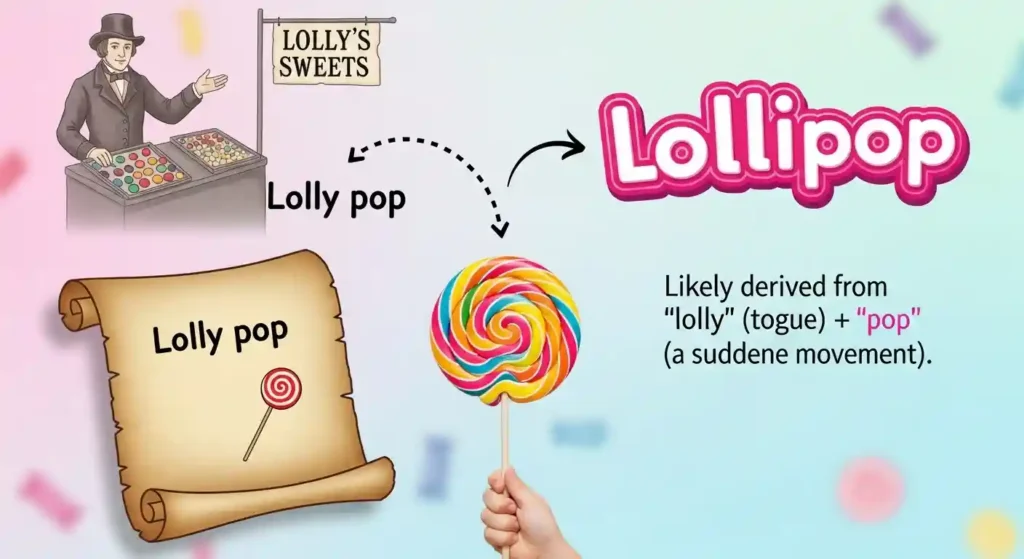
If you’ve ever unwrapped a lollipop and wondered how it got such a fun, bouncy name, you’re not alone. The question of where does the name lollipop come from has puzzled candy lovers, etymologists, and curious kids for generations. And honestly, the answer is more interesting than you’d expect.
The Candy Itself: A Quick Background
Before diving into the name, it helps to know a little about the treat itself. A lollipop is essentially hard candy mounted on a stick — simple, portable, and universally loved. Versions of this concept date back centuries, long before the modern lollipop was commercially produced.
Ancient civilizations in China, Egypt, and Arabia all made forms of hardened sugar or honey treats. Sometimes they added nuts or fruit. Sometimes they used sticks or reeds to make them easier to hold. So the idea of “candy on a stick” isn’t new — but the word lollipop? That came much later.
So, Where Does the Name Lollipop Come From?
This is where things get genuinely interesting. There’s no single clean answer — instead, there are a few competing theories, each with its own logic.
Theory 1: It Comes From Romany Language
One of the most widely cited explanations traces the word back to the Romany language. In Romany, “loli phaba” means “red apple.” Since early candy-on-a-stick treats were sometimes apple-shaped and red-colored, many historians believe this phrase gradually evolved and anglicized into “lollipop.”
This theory has reasonable roots. Romany communities traveled widely across Europe, and their language influenced many English words over the centuries. It’s entirely plausible that a Romany phrase describing a sweet, red treat made its way into British street slang and eventually into the dictionary.
Theory 2: Old English Dialect
Another theory points to Northern English dialect. In some parts of England, “lolly” was a colloquial word for tongue. Combined with “pop” — a common informal term for a sweet or treat — you get “lollipop,” which would literally translate to something like “tongue sweet” or “mouth candy.”
This explanation actually makes a lot of physical sense. You lick a lollipop with your tongue. The name, in this reading, describes exactly what you do with it.
What Is Emotional Value Meaning and Why It Matters
Theory 3: George Smith and the 1908 Patent
Here’s where commercial history enters the picture. A confectioner named George Smith from New Haven, Connecticut, is often credited with giving the modern lollipop its name. In 1908, he began producing hard candy on sticks and reportedly named the product after a racehorse he admired called Lolly Pop.
Smith filed a trademark for the name “Lollipop” in 1931. That said, there’s debate over whether he truly invented the concept or simply commercialized and branded it effectively. Either way, his contribution to the word’s widespread use in American English is hard to ignore.
Theory 4: Onomatopoeia and Playful Sound
Some linguists suggest the name may have partly caught on simply because it sounds fun. Words that repeat sounds — like “lollipop” — are called reduplicative words, and English has a long history of embracing them (think: flip-flop, tick-tock, ping-pong). The word lollipop rolls off the tongue easily, sounds playful, and fits perfectly for a children’s candy. Sometimes a name sticks because it just sounds right.
How the Word Spread Into Everyday Language
By the early 20th century, “lollipop” had firmly entered the American and British vocabulary. It appeared in newspapers, candy shop menus, and children’s literature. The word also started taking on broader cultural meanings.
In British slang, “lolly” became a generic word for candy or money. In Australia, “lolly” still refers to any type of sweet today. The word clearly had staying power — and versatility.
By the 1950s and 60s, lollipops were a pop culture staple. Songs were written about them. Advertisements plastered them everywhere. The Tootsie Pop became iconic in the U.S., and a whole generation grew up associating the word with childhood joy.
Pros and Cons of the Different Origin Theories
Pros of the Romany “loli phaba” theory:
- Supported by linguistic historians
- Romany influence on English is well-documented
- Explains the specific red-apple imagery in early candy designs
Cons:
- Hard to trace a direct linguistic chain
- No written record pinpoints the exact transition
Pros of the Northern English dialect theory:
- Logical and descriptive (tongue + sweet)
- Consistent with how English dialect words evolved
- Easy to imagine it spreading through trade and travel
Cons:
- “Lolly” meaning tongue is now largely archaic
- Hard to verify without historical documentation
Pros of the George Smith theory:
- Tied to a real, traceable commercial history
- Trademark filing gives it legal documentation
- Easy to teach and remember
Cons:
- Likely reflects branding, not the true origin of the word
- The word may have already existed before his use of it
Common Mistakes People Make About Lollipop History
Assuming one theory is definitively correct. The honest truth is that etymology is rarely clean. Most word origins involve overlap, borrowing, and gradual change over time. Don’t let anyone tell you there’s one definitive answer here.
Confusing the candy’s invention with the name’s origin. Hard candy on a stick existed long before the word “lollipop” did. These are two separate stories.
Thinking George Smith invented the lollipop. He popularized and commercialized a version of it — but the concept of candy on a stick is ancient.
Assuming “lolly” only means lollipop. In several English-speaking countries, the word has broader meanings. Context matters.
Best Practices If You’re Writing or Teaching About Word Origins
- Always present multiple theories and let the evidence speak.
- Use credible etymological sources like the Oxford English Dictionary or Merriam-Webster.
- Distinguish between a word’s first recorded use and its actual spoken origin — those are often different.
- Keep it engaging. Word histories are genuinely fun when told well.
- Cross-reference commercial history with linguistic history. They often inform each other.
A Little Extra: The Cultural Life of Lollipop
The word took on a life well beyond the candy aisle. “Lollipop” became a term of endearment in some regions. It inspired songs like the classic 1958 hit by The Chordettes. It’s used metaphorically in literature. And in the UK, crossing guards near schools are still affectionately called “lollipop ladies” or “lollipop men” because of the round stop signs they carry on long poles.
That’s the mark of a truly great word — it escapes its original context and becomes part of the culture.
Conclusion
So, where does the name lollipop come from? The most honest answer is: probably a mix of sources. The Romany phrase “loli phaba,” old English dialect, the colorful branding of George Smith, and the simple joy of how the word sounds — all of these threads likely wove together over time to give us the name we know today.
Language is rarely a straight line. It borrows, bends, and evolves. And sometimes, the journey of a single word tells you more about history than a textbook ever could. Next time you’re enjoying a lollipop, you’re holding a tiny piece of linguistic history in your hand.
FAQs
1. Where does the name lollipop come from originally?
The name likely comes from a combination of sources including the Romany phrase “loli phaba” (meaning red apple), old Northern English dialect where “lolly” meant tongue, and early 20th-century American branding by confectioner George Smith.
2. Who first used the word lollipop?
George Smith of New Haven, Connecticut is often credited with popularizing the name commercially around 1908, though the word itself may predate his use of it.
3. What does lollipop mean in British slang?
In British English, “lolly” broadly refers to candy or sweets. “Lollipop” can also refer to the round stop signs carried by school crossing guards, earning them the nickname “lollipop ladies.”
4. Is the word lollipop in the Oxford English Dictionary?
Yes. The OED documents the word with early 18th-century citations, suggesting it entered written English well before George Smith’s commercial use in the 1900s.
5. What language did the word lollipop come from?
There’s no single source language. Leading theories point to Romany, Northern English dialect, and American commercial slang — all contributing to the modern English word we use today.
Frequently Asked Questions
What is Where Does the Name Lollipop Come From??
Where Does the Name Lollipop Come From? Is a topic that many people search for. This article provides a thorough overview based on current information and expert analysis available in 2026.
Why does Where Does the Name Lollipop Come From? matter?
Understanding Where Does the Name Lollipop Come From? Helps you make better decisions. Whether you’re a beginner or have some experience, staying informed on this topic is genuinely useful.
Where can I learn more about Where Does the Name Lollipop Come From??
We recommend checking authoritative sources and official websites for the most current information. This article is regularly updated to reflect new developments.
Source: Britannica
Related Articles
- SV Wehen Wiesbaden vs Bayern Munich Lineups Preview
- Actor Michael C. Hall: From Dexter to Broadway Mastery
- Swing for the Fences: Exploring VIPBox's Ultimate Baseball Coverage
Editorial Note: This article was researched and written by the Floral Loft SAC editorial team. We fact-check our content and update it regularly. For questions or corrections, contact us.
Related read: Alpaca vs Llama: The Definitive 2026 Guide to South American Camelids.