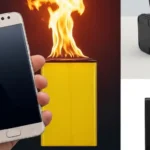
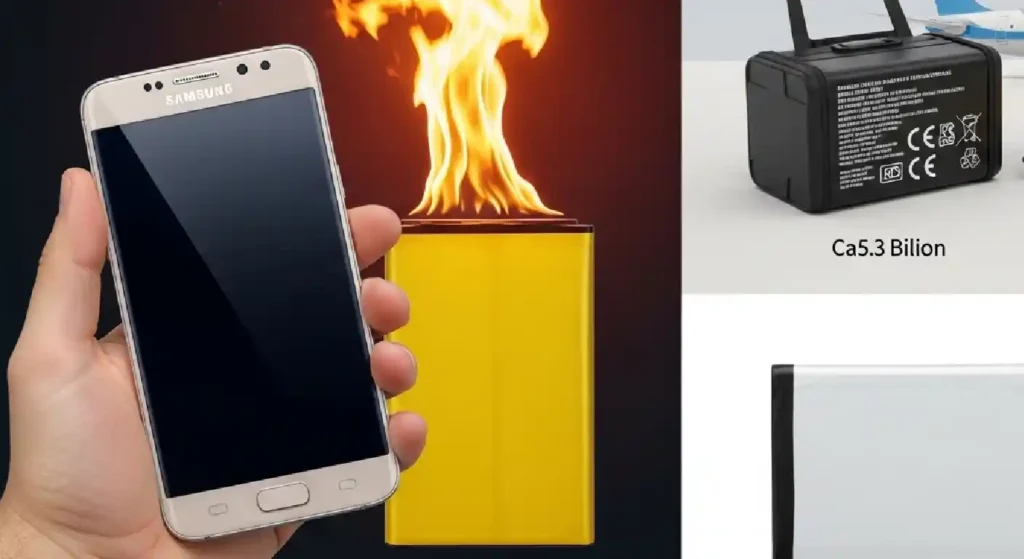
In 2016, Samsung recalled 2.5 million Galaxy Note 7 smartphones after lithium-ion batteries overheated causing fires—total cost $5.3 billion. In 2023, FAA investigated 46 incidents of lithium polymer battery fires in checked luggage on commercial flights. Both incidents underscore battery technology’s critical importance: Li-ion vs LiPo battery selection determines device performance, safety, weight, lifespan, and regulatory compliance across consumer electronics, drones, electric vehicles, and industrial applications.
What differentiates these lithium-based technologies? Li-ion uses liquid electrolyte in rigid cylindrical/prismatic cells (150-250 Wh/kg energy density, 500-1,000 cycles), while LiPo uses polymer electrolyte in flexible pouch cells (100-200 Wh/kg, 300-500 cycles, lighter weight, higher discharge rates). This guide uses February 2026 battery data, performance comparisons, and application frameworks enabling optimal battery selection.
Li-ion vs LiPo Battery: Fundamental Chemistry and Construction
Li-ion (Lithium-Ion) batteries:
- Electrolyte: Liquid lithium salt in organic solvent
- Construction: Rigid cylindrical (18650, 21700) or prismatic hard case
- Anode: Graphite
- Cathode: Lithium cobalt oxide (LiCoO₂), lithium iron phosphate (LiFePO₄), or NMC (nickel-manganese-cobalt)
- Separator: Porous polymer preventing cathode-anode contact
LiPo (Lithium Polymer) batteries:
- Electrolyte: Polymer gel or solid polymer
- Construction: Flexible aluminum-laminated pouch (soft pack)
- Anode: Graphite (same as Li-ion)
- Cathode: Similar lithium compounds as Li-ion
- Separator: Polymer film
Critical distinction: Construction method (rigid case vs flexible pouch) and electrolyte state (liquid vs polymer gel) create all downstream performance differences—form factor, weight, safety characteristics, discharge capability. For specialized applications, partnering with a Custom Lipo Battery manufacturer- Symbo Battery ensures optimized packs for high-performance and custom-shaped devices.
Comprehensive Performance Comparison
| Characteristic | Li-ion (Cylindrical/Prismatic) | LiPo (Polymer Pouch) |
|---|---|---|
| Energy density | 150-265 Wh/kg (higher) | 100-200 Wh/kg (lower) |
| Nominal voltage | 3.6-3.7V per cell | 3.7V per cell |
| Charge voltage | 4.2V max (4.35V high-voltage variants) | 4.2V max |
| Discharge cutoff | 2.5-3.0V (varies by chemistry) | 3.0V typical |
| Weight | Heavier (metal casing adds 10-20% mass) | Lighter (aluminum pouch minimal weight) |
| Form factor | Rigid cylinders (18650: 18mm×65mm, 21700: 21mm×70mm) or prismatic rectangles | Flexible custom shapes, thin profiles (1-10mm thickness) |
| C-rating (discharge) | 1-5C typical (burst to 10C) | 10-100C+ (high-performance variants) |
| C-rating (charge) | 0.5-1C standard | 1-5C (fast-charge capable) |
| Cycle life | 500-1,500 cycles (80% capacity) | 300-500 cycles typical |
| Self-discharge | 2-5% per month | 3-8% per month (higher) |
| Operating temp | -20°C to 60°C | -20°C to 60°C (more swelling risk hot) |
| Safety | Moderate (thermal runaway risk if punctured/overcharged) | Higher risk (no hard case, swells/leaks easier) |
| Cost | $0.10-0.25/Wh (economy of scale) | $0.20-0.50/Wh (higher) |
| Lifespan | 2-10 years depending on usage | 2-4 years typical |
Energy Density and Weight Trade-offs
Li-ion advantage: Higher volumetric energy density (250-700 Wh/L) enables longer runtime in size-constrained applications. 18650 cell stores ~12 Wh at 46g = 260 Wh/kg.
LiPo advantage: Despite lower Wh/kg, eliminates metal casing weight—20-30% lighter total pack weight for equivalent capacity. Critical for weight-sensitive applications where every gram affects performance.
Example comparison (2,200 mAh, 3.7V = 8.14 Wh capacity):
- Li-ion 18650 cell: 46g total (177 Wh/kg)
- LiPo pouch cell: 36g total (226 Wh/kg when excluding casing, but lower energy density requiring larger volume)
Real-world impact: Drone with 500g payload budget—LiPo battery saves 80-100g vs Li-ion equivalent capacity, enabling 15-20% longer flight time through weight reduction despite slightly lower energy density.
Where Does the Name Lollipop Come From?
Discharge Rate (C-Rating) Performance
C-rating defines maximum safe discharge current as multiple of battery capacity. 1,000 mAh battery rated 20C can discharge 20A (20 × 1A) continuously.
Li-ion discharge capability:
- Standard: 1-2C continuous (consumer electronics)
- High-drain: 5-10C continuous (power tools)
- Peak burst: 20C momentary
LiPo discharge capability:
- Standard: 10-20C continuous
- High-performance: 30-50C continuous (racing drones)
- Extreme: 80-100C+ burst (competition RC)
Why LiPo wins high-discharge applications: Polymer electrolyte lower internal resistance, pouch construction allows better heat dissipation, parallel plate design optimizes current flow. Li-ion cylindrical cells higher internal resistance limiting discharge capability.
Application impact: RC car requiring 50A burst (6S 5,000 mAh, 22.2V)—needs minimum 10C rating. LiPo handles easily (50C packs common), Li-ion requires paralleling multiple cells increasing complexity/weight.
Form Factor Flexibility and Design Freedom
Li-ion limitations: Cylindrical cells require cylindrical spaces, prismatic cells rigid rectangles. Device design accommodates battery shape.
LiPo advantages: Pouch cells manufactured in virtually any rectangular dimension—custom thickness (2-15mm), width, length enabling:
- Ultra-thin smartphones/tablets (3-5mm battery profiles)
- Wearable devices conforming to wrist curvature
- Drone frames utilizing irregular spaces
- Medical devices fitting anatomical shapes
Design philosophy shift: Li-ion = design device around battery. LiPo = design battery around device.
Safety Characteristics and Risk Management
Li-ion safety features:
- Hard metal casing contains pressure (up to point—then vents/explodes)
- Built-in protection circuit modules (PCM) preventing overcharge/over-discharge
- Pressure-relief vents
- PTC (positive temperature coefficient) current limiters
Li-ion failure modes: Thermal runaway if internal short-circuit occurs (puncture, dendrite growth, separator failure), pressure buildup potentially causing violent rupture/fire.
LiPo safety vulnerabilities:
- No rigid containment—swells visibly when degraded/overcharged
- Puncture risk higher (flexible pouch vs hard case)
- Overcharge causes gas generation, swelling, potential fire
- Deep discharge (below 3.0V) causes permanent damage, increased fire risk on recharge
LiPo safety requirements:
- Balance charging mandatory (equalizes individual cell voltages in series packs)
- LiPo-specific chargers with voltage monitoring
- Storage at 3.8V per cell (50% charge) prevents degradation
- Fireproof charging/storage bags recommended
- Never charge unattended
Regulatory implications: Airlines restrict LiPo batteries in checked luggage (fire suppression inaccessible), limit carry-on quantities (typically 100Wh individual cells, 160Wh with approval).
Cycle Life and Degradation
Li-ion longevity factors:
- 500-1,000 cycles (standard chemistry) to 80% capacity
- LiFePO₄ chemistry: 2,000-5,000 cycles (trade-off: lower voltage 3.2V nominal)
- Degradation rate: ~20% capacity loss per 500 cycles at 100% DoD (depth of discharge)
- Calendar aging: ~20% capacity loss per 2-3 years storage at room temperature
LiPo longevity factors:
- 300-500 cycles typical to 80% capacity
- High C-rate discharge accelerates degradation (50C usage vs 10C reduces lifespan 30-40%)
- Deeper discharge (3.0V vs 3.3V cutoff) reduces cycle life 20-30%
- Storage at 3.8V (vs 4.2V full charge) extends calendar life 2-3×
Lifespan extension practices:
- Avoid full discharge (stop at 20-30% capacity remaining)
- Charge to 80-90% for daily use (not 100% unless needed)
- Store at 40-60% charge in cool location (<25°C)
- Avoid high-temperature exposure (>40°C significantly accelerates aging)
Application-Specific Selection Criteria
Choose Li-ion when:
- Long runtime prioritized over weight (laptops, power banks, EVs)
- Device lifespan >5 years expected (consumer electronics)
- Continuous moderate discharge adequate (smartphones, tablets)
- Safety regulations restrictive (commercial aviation, consumer products)
- Cost sensitivity critical (mass market devices)
- Cylindrical/prismatic form factor acceptable
Choose LiPo when:
- Weight critical performance factor (drones, RC vehicles, wearables)
- High discharge bursts required (racing applications, power tools)
- Thin/custom form factor essential (smartphones, tablets, medical implants)
- Space optimization critical (irregular device geometry)
- User accepts shorter lifespan trade-off (hobby applications)
- Willing to manage charging/safety protocols
Hybrid approaches: Some devices use Li-ion for base capacity (cost/longevity) plus LiPo for peak power delivery (burst performance).
Charging Requirements and Best Practices
Li-ion charging (CC/CV protocol):
- Constant current (0.5-1C) until 4.2V reached
- Constant voltage (4.2V) until current drops to 0.05-0.1C
- Terminate charge (total time: 2-4 hours for 1C charging)
LiPo charging (balance charging mandatory):
- Individual cell voltage monitoring (series packs)
- CC/CV charging with per-cell voltage limiting
- Balance circuits equalize cells within ±0.01V
- Storage charge mode (3.8V per cell for long-term storage)
Charger requirements: LiPo chargers must support balance connectors (JST-XH common), provide per-cell voltage display, allow storage charge mode. Never use Li-ion charger on LiPo without balance capability—voltage imbalance creates fire risk.
Cost Analysis: Initial Investment vs Long-Term Value
Upfront cost (Feb 2026, 10,000 mAh, 3.7V = 37 Wh):
- Li-ion pack (10× 18650 cells): $15-25 ($0.40-0.68/Wh)
- LiPo pack (custom pouch): $25-45 ($0.68-1.22/Wh)
Total cost of ownership (5-year lifespan, 1 charge/day):
- Li-ion: 1,825 cycles total, degrades to 60% capacity year 4 (requires replacement year 5), total cost $15-25 initial + $15-25 replacement = $30-50
- LiPo: 365 cycles/year × 500 cycle limit = 1.4 years before 80% capacity, requires 3-4 replacements over 5 years, total cost $100-180
Li-ion economic advantage: 50-70% lower total cost of ownership for long-term applications despite similar upfront cost.
FAQs: Li-ion vs LiPo Battery Selection
- Main difference between Li-ion and LiPo batteries.
Li-ion: rigid case, liquid electrolyte, high energy density; LiPo: flexible pouch, polymer electrolyte, lighter, high discharge rate. - Which battery lasts longer: Li-ion or LiPo?
Li-ion: 500–1,500 cycles; LiPo: 300–500 cycles. Li-ion preferred for longevity-critical applications. - Are LiPo batteries safer than Li-ion?
No. LiPo swells easily; Li-ion rigid casing offers protection. Both require proper charging and storage. - Can I replace Li-ion with LiPo battery?
Only if voltage, capacity, discharge, space, and charger compatibility match. Usually not recommended. - Which battery is better for drones?
LiPo preferred: lighter, high C-rate, flexible form, handles burst power; Li-ion for long-endurance drones only. - Why do LiPo batteries swell?
Overcharging, deep discharge, high temperature, aging, or internal short circuit; swollen batteries must be safely recycled.
Strategic Battery Technology Selection
Li-ion vs LiPo battery decision fundamentally balances energy density/longevity/cost (Li-ion advantages) against weight/discharge rate/form factor flexibility (LiPo advantages). Application requirements—runtime duration, weight constraints, discharge patterns, lifespan expectations, safety regulations, cost sensitivity—determine optimal technology.
Understanding chemistry differences, performance trade-offs, safety protocols, and charging requirements enables informed battery selection protecting device performance, user safety, and long-term value. Neither technology universally superior—context-specific optimization yields best results.
What battery selection challenge is preventing confident technology decision—discharge rate requirements unclear, weight vs runtime trade-off optimization, safety protocol complexity, or lifespan vs cost analysis?