You’re standing in the bookstore or scrolling through your e-reader, and you’ve heard the buzz. You want a story that has more “meat” than a standard romance but more heart than a dry historical text. You’ve heard about a manuscript, a witch, and a vampire, but when you look at the shelf, you’re paralyzed.
Last updated: June 9, 2026
Do you start with the one with the bright red cover? Is the new one a prequel or a sequel? The frustration of accidentally spoiling a major character death because you read book four before book two is real. You don’t want a reading list; you want a roadmap that respects your time and your love for deep lore.
This article isn’t just a list of titles. It’s a complete guide to understanding why Deborah Harkness books have redefined the “Arctasy” (Academic Fantasy) genre. By the end of this, you’ll know exactly which book to grab first, how the timeline fits together, and how to avoid the common pitfalls that new fans fall into.
What are Deborah Harkness books?
In plain English, Deborah Harkness books are a blend of meticulous historical fiction, supernatural suspense, and high-stakes romance. While she is a real-life historian and professor, her fiction focuses on the “All Souls Universe.”
This is a world where witches, vampires, and daemons live secretly among humans. They are bound by a “Covenant” that forbids them from intermingling, but all of that changes when a historian named Diana Bishop pulls a lost, enchanted manuscript out of the Bodleian Library.
Unlike “sparkly” vampire tropes, these books treat magic and immortality like a science. Harkness uses her background in the history of science to make the alchemy, biology, and politics of her supernatural world feel vividly grounded in reality.
The All Souls Universe Explained: A Real-World Scenario
Imagine you are a PhD student at Oxford. You’ve spent your life running away from your family’s history of witchcraft because you’d rather rely on logic and hard evidence. One afternoon, you call up a book from the stacks—Ashmole 782—and as soon as you touch it, you feel a literal electrical shock.
Suddenly, you aren’t just a student anymore. You are the most hunted person in the supernatural world. This is the core scenario of the Deborah Harkness books.
The story isn’t just about “magic spells.” It’s about how a woman who values her intellect above all else deals with a destiny she never asked for. The books explore the intersection of modern DNA science and ancient alchemy, making the world feel like it could be happening in the library right next to you.
What Time Zone is Houston? The Complete Guide for 2026
Step-by-Step: How to Read Deborah Harkness Books in Order
Navigating this series can be tricky because the publication order and the internal chronological order differ slightly. To get the best experience without getting confused by time-travel paradoxes, follow this specific path:
-
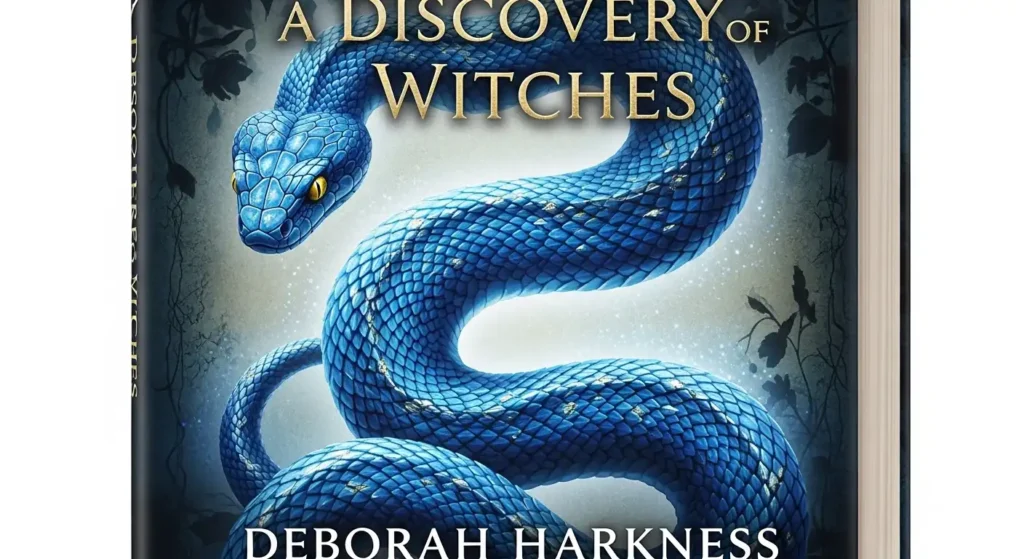
Start with A Discovery of Witches: This is the foundation. It introduces Diana Bishop and Matthew Clairmont. It sets the stakes and explains the biology of the three species.
-
Move to Shadow of Night: This is book two. It takes you into 16th-century London. If you skip this, you will be completely lost regarding the “Blood Rage” plotline in later books.
-
Finish the main trilogy with The Book of Life: This brings the story back to the present day and resolves the mystery of the manuscript. Always read the core trilogy first.
-
Read Time’s Convert: This is a “companion” novel. It’s essentially a prequel for Marcus (Matthew’s son) and a sequel for Phoebe (his human girlfriend). It bridges the gap between the old world and the new.
-
Dive into The Black Bird Oracle: This is the newest installment. It shifts the focus to Diana’s family roots and a different kind of dark magic.
-
The World of All Souls (Optional but Recommended): Use this as a reference guide. It contains maps, recipes, and character bios that help flesh out the dense history Harkness creates.
Common Mistakes Readers Make
The biggest mistake readers make is viewing these books as “Quick Reads.” If you go in expecting a fast-paced, 200-page YA novel, you might find yourself frustrated. These are “chunksters”—large, dense books that reward patience.
Another mistake is skipping the historical descriptions. Because Harkness is an actual historian, she spends a lot of time describing 16th-century court life or the specifics of 17th-century wine-making. While it might feel like “fluff,” these details often contain clues to the magical mechanics of the world.
Lastly, don’t try to read the series out of order. Some series (like Discworld) allow you to jump in anywhere. Deborah Harkness books are strictly linear. If you read The Black Bird Oracle before A Discovery of Witches, the emotional weight of the family reunions will be completely lost on you.
All Souls Series vs. Twilight: A Comparison
Many people mistakenly lump these books into the “Vampire Romance” category popularized in the mid-2000s. Here is how they actually stack up:
| Feature | Twilight Series | Deborah Harkness Books |
| Protagonist | Teenager (Bella) | Tenured Professor (Diana) |
| Primary Theme | First Love/Obsession | Science, History & Genetic Heritage |
| Vampire Origins | Biological Mystery | Evolution & Alchemy |
| Pace | Fast/Action-Oriented | Slow-Burn/Intellectual |
| World Building | Modern Day Only | Multi-Century Historical Landscapes |
| Magic System | Inherent/Genetic | Academic/Research-Based |
Pro Tips for Enjoying Deborah Harkness Books
If you want to truly master the lore, keep a “Character Map” or use the index. The Clairmont family tree is massive, spanning over 1,500 years. It’s easy to forget which vampire turned which “child” in the 12th century.
Another tip is to pay attention to the wine and food. Matthew Clairmont is a connoisseur, and Harkness uses wine descriptions to signal the mood or the era. It’s a sensory experience that adds a layer of “luxury” to the reading process.
Finally, listen to the audiobooks if you find the prose too dense. The narrator, Jennifer Ikeda, does an incredible job with the various accents (French, Italian, Elizabethan English), which makes the transition between time periods much smoother for your brain.
Frequently Asked Questions
Do I need to be a history buff to enjoy Deborah Harkness books?
Not at all. While the history is accurate and deep, the story is driven by characters and romance. The history acts as a beautiful backdrop rather than a requirement for entry.
Is the All Souls series finished?
The “All Souls Trilogy” is a completed three-book arc. However, the All Souls Universe is ongoing, with spin-offs like Time’s Convert and The Black Bird Oracle expanding the story.
What is the “Missing” manuscript, Ashmole 782?
it’s a real-life manuscript that’s actually missing from the Bodleian Library. Harkness used this real-world mystery as the catalyst for her fictional world.
Are these books suitable for young adults?
While there’s no “explicit” content that would ban it from a YA shelf, the themes—tenure, academic research, pregnancy, and complex family politics—are geared toward an adult audience.
Is there a TV show based on the books?
Yes, there’s a series titled A Discovery of Witches. It covers the original trilogy across three seasons. Most fans recommend reading the books first to understand the “why” behind the magic.
Why are there so many references to Alchemy?
Harkness is an expert on the history of alchemy. In her books, alchemy is the precursor to modern science and the key to how magic actually functions in the physical world.
The Future of the All Souls Universe
The most exciting thing about Deborah Harkness books is that the world is still growing. Unlike many authors who finish a trilogy and move on, Harkness is committed to filling in the “gaps” of her timeline. We are seeing more focus on the “Shadow World”—the parts of the supernatural community that don’t belong to the elite Clairmont family.
The “Missed” Insight: Most reviews focus on the romance between Matthew and Diana. However, the real heart of these books is the deconstruction of “the Great Man” theory of history. Harkness shows that history isn’t just made by kings; it’s made by the people in the kitchens, the laboratories, and the quiet corners of libraries.
If you are looking for a series that respects your intelligence while still giving you a world to disappear into, look no further. The blend of real-world science and high-fantasy stakes makes this a unique pillar in modern literature.
Your next step: Head to your local library or bookstore and pick up a copy of A Discovery of Witches. Commit to reading the first 100 pages—that’s where the “hook” truly sinks in. You’ll never look at an old library book the same way again.
Source: Britannica
Related Articles
- the Social Media Landscape: One Guy's Perspective on Forum Dynamics
- What Does ICL Mean? The Full Guide to Slang & Abbreviations
- On Tech Reviews: Uncovering the Best Gadgets and Innovations Today
Editorial Note: This article was researched and written by the Floral Loft SAC editorial team. We fact-check our content and update it regularly. For questions or corrections, contact us.