
You see the dusty roads every morning on your way to work. You notice the local clinic hasn’t had medicine for weeks, and the streetlights in your neighborhood have been dark for a month. You pay your taxes and business permits, but it feels like your money disappears into a black hole of bureaucracy. You want to speak up, but you don’t know which meeting to attend or which document actually holds the power to fix your street. You feel ignored by the very people elected to serve you.
This article is your roadmap. It breaks down the County Integrated Development Plan (CIDP) into plain English so you can stop feeling like a spectator and start acting like a stakeholder. By the time you finish reading, you will know exactly how to track your county’s promises and how to demand the services you’ve already paid for.
What is a County Integrated Development Plan?
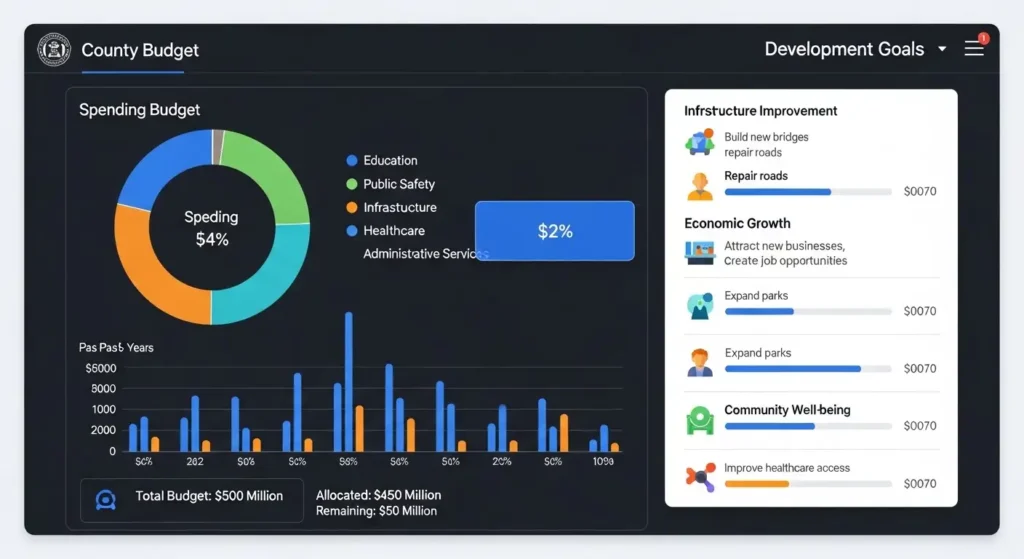
In the simplest terms, a County Integrated Development Plan is a five-year blueprint that tells you exactly what your local government plans to do with your money. Think of it as a master “to-do list” for the county. If a project—like a new market, a paved road, or a water borehole—isn’t in this document, it technically shouldn’t receive a single cent of funding.
The CIDP is designed to coordinate different sectors. Instead of the health department building a clinic and the water department forgetting to pipe water to it, the “integrated” part of the plan ensures they work together. It aligns the county’s goals with national visions and global standards like the Sustainable Development Goals (SDGs). The CIDP is the legal foundation for all county budgeting and spending.
OpenFuture World: Mastering the Global Open Finance Movement
The CIDP Explained with a Real-World Scenario
Let’s look at a practical example. Imagine a county where the youth unemployment rate is skyrocketing. Without a County Integrated Development Plan, the Governor might decide to build a high-end stadium because it looks good in photos. However, if the CIDP process is followed correctly, the data might show that what the youth actually need is a vocational training center and high-speed internet hubs.
In this scenario, the CIDP acts as a filter. During public forums, residents of a specific ward argue that a stadium won’t put food on their tables. They lobby for the “ICT and Vocational Training” pillar of the plan. Because their needs are captured in the final document, the county assembly is legally bound to allocate funds toward those training centers over the next five years. The CIDP turns the “wants” of politicians into the “needs” of the people.
How to navigate the CIDP Process: Step-by-Step
Understanding the timeline is crucial because if you miss the window for input, you are stuck with the plan for half a decade. Here is how the cycle typically moves:
-
The Launch and Data Collection: The county executive starts by gathering data on the current state of the county. This includes population stats, existing infrastructure, and economic gaps.
-
Public Participation Forums: This is your most important moment. The county must hold meetings in every sub-county or ward. You show up, voice your priorities, and ensure they are recorded in the minutes.
-
Drafting the Document: Technical teams take the public’s views and align them with available resources. They create a draft that outlines “Sectors” (Health, Agriculture, Education, etc.).
-
The Feedback Loop: A draft should be made public. You must review this to ensure the “vocational center” you asked for actually made it into the text.
-
County Assembly Approval: The plan goes to the local representatives (MCAs or Councilors). They debate it and, if it meets the legal requirements, they vote to pass it.
-
Implementation and Monitoring: Once passed, every Annual Development Plan (ADP) for the next five years must be extracted from this master CIDP.
Pro Tip: Always ask for the “Project List” annex in the draft. The main text might be full of flowery language, but the annex lists specific locations and estimated costs.
Common Mistakes People (and Governments) Make
The biggest mistake citizens make is treating public participation as a social event. People often show up to forums, complain about general issues, and leave without signing the attendance sheet or submitting a written memorandum. If your suggestion isn’t written down, it doesn’t exist in the eyes of the law.
On the government side, a frequent error is over-budgeting. Counties often create “wish lists” worth billions more than they will ever collect in taxes or receive from the national treasury. When the CIDP is unrealistic, it becomes a “shelf document”—something that looks pretty in a library but is never used because there’s no money to execute it. A plan without a clear financing strategy is just a dream.
Another misconception is that the CIDP is set in stone. While it’s a 5-year plan, there are legal avenues for mid-term reviews. If a major event happens—like a pandemic or a severe drought—the county can and should adjust the plan to meet new realities.
CIDP vs. Annual Development Plan (ADP)
it’s easy to get confused by the alphabet soup of government planning. Use this table to understand the difference between the long-term vision and the short-term execution.
| Feature | County Integrated Development Plan (CIDP) | Annual Development Plan (ADP) |
| Duration | 5 Years | 1 Year |
| Purpose | High-level strategic goals and vision. | Specific projects to be funded this year. |
| Legal Weight | The “Constitution” of county development. | The “Action Plan” for the current budget. |
| Flexibility | Difficult to change; requires a formal review. | Updated every year to reflect cash flow. |
| Scope | Covers all sectors and long-term targets. | Focuses on immediate deliverables and “low-hanging fruit.” |
Pro Tips for Effective Influence
To truly master the County Integrated Development Plan, you need to look beyond the town hall meetings. Here are three best practices for serious community advocates:
-
Form a Budget Watchdog Group: A single voice is easily ignored. A registered community-based organization (CBO) that submits a formal, data-backed memorandum carries much more weight during the planning phase.
-
Track the “Indicators”: Every CIDP has a monitoring and evaluation section. Look for phrases like “Number of kilometers paved” or “Percentage of households with clean water.” If the plan says they will pave 50km but they only do 5km, you have the data to hold them accountable.
-
Utilize Digital Portals: Most counties now use platforms like Open County or their official websites to post draft documents. Download these PDFs and use “Ctrl+F” to search for your specific village or ward. If your area is missing, start making noise immediately.
Frequently Asked Questions
Can a Governor change the CIDP after being elected?
Yes, but they must follow a legal process. If a new Governor takes office mid-cycle, they often create a “CIDP Amendment” or a new plan that reflects their manifesto, but this still requires public participation and assembly approval.
What happens if a project is in the CIDP but doesn’t get funded?
This is common. The CIDP is a statement of intent. Funding depends on the annual budget. However, having it in the CIDP is the first hurdle; if it’s not in the plan, it can’t legally be in the budget at all.
Is public participation mandatory?
Absolutely. In most jurisdictions, a County Integrated Development Plan can be challenged in court and declared “null and void” if the government can’t prove they genuinely consulted the public.
Where can I find my county’s CIDP?
You should find it on your county government’s official website, usually under the “Downloads,” “Treasury,” or “Planning” tabs. You can also visit the county planning office to request a hard copy.
How do I know if the CIDP is actually working?
Look for the Annual Implementation Report. This document is supposed to compare the CIDP targets against the actual work done. If your county doesn’t publish these, that’s a major red flag regarding transparency.
Take Charge of Your County’s Future
The County Integrated Development Plan is more than just a thick book of statistics; it’s the primary tool for social justice in your community. It determines whether your children have a modern school or if your parents have a reliable hospital. When you understand the CIDP, you move from being a victim of poor governance to being an architect of local progress.
Source: Wired
Related Articles
- Internetchicks: The Future of Digital Influence
- Mylawyer360: Your Ultimate Guide to Simplified Legal Solutions
- Kicking Off: An In-Depth Look at Steameast Soccer and Its
Editorial Note: This article was researched and written by the Floral Loft SAC editorial team. We fact-check our content and update it regularly. For questions or corrections, contact us.