
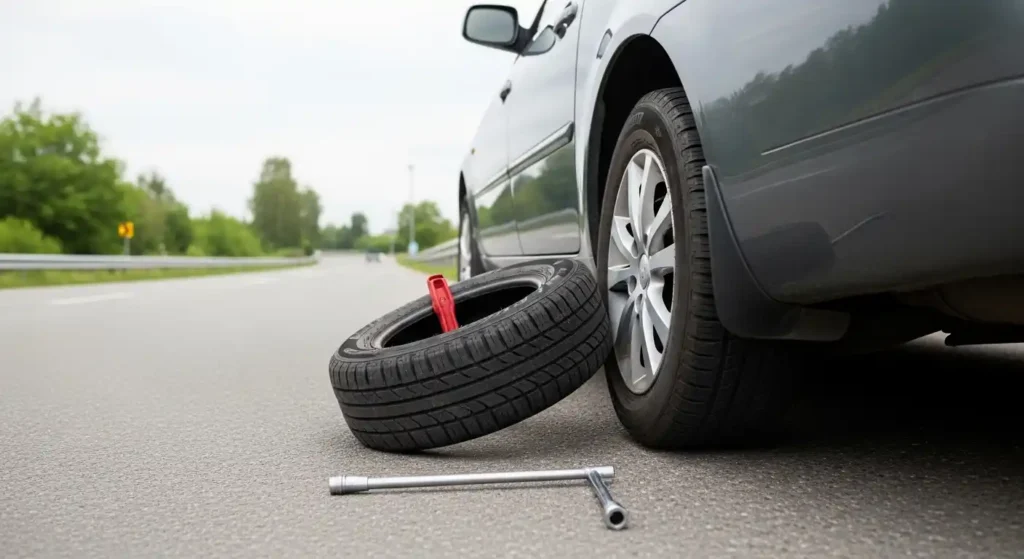
Getting a flat tire is one of those situations nobody plans for — but it happens to almost every driver at some point. Knowing how to change a tire can save you hours of waiting for roadside assistance and give you real confidence behind the wheel. Whether you’re parked on a quiet street or stuck on the shoulder of a busy highway, this guide walks you through every step clearly and safely.
What You’ll Need Before You Start
Before you even touch the flat, make sure you have the right tools. Most cars come with a basic emergency kit in the trunk, but it’s worth double-checking.
Here’s what you’ll need:
- Spare tire (make sure it’s properly inflated)
- Car jack
- Lug wrench
- Vehicle owner’s manual
- Wheel wedges or large rocks (optional but helpful)
- Reflective triangles or flares
- Flashlight
- Rain poncho or work gloves
If any of these are missing from your car, it’s a good idea to grab them before you ever need them. Five minutes of preparation can make a huge difference on the side of the road.
How to Change a Tire: Step-by-Step
Step 1 — Get to a Safe Location
The moment you notice a flat, don’t slam on the brakes. Ease off the gas gradually and steer toward a flat, stable surface — a parking lot is ideal. If you’re on a highway, try to reach the nearest exit ramp or pull as far onto the shoulder as possible.
Turn on your hazard lights immediately. Once stopped, put the car in park, engage the parking brake, and place reflective triangles or flares behind the vehicle to alert other drivers.
Step 2 — Loosen the Lug Nuts
Before you jack up the car, loosen the lug nuts on the flat tire while the wheel is still on the ground. This prevents the wheel from spinning when you apply force.
Use the lug wrench and turn counterclockwise. You don’t need to remove them yet — just break the resistance. If they’re really tight, use your body weight and stand on the wrench carefully.
Step 3 — Position and Raise the Jack
Check your owner’s manual to find the correct jack points on your vehicle’s frame. Placing the jack in the wrong spot can damage the car or cause it to fall.
Once positioned correctly, crank the jack until the flat tire is about six inches off the ground. Move slowly and make sure the car feels stable as it rises.
Step 4 — Remove the Flat Tire
Now fully remove the lug nuts — keep them somewhere safe like your pocket so they don’t roll away. Pull the flat tire straight toward you and set it aside under the vehicle as a precaution in case the jack slips.
Step 5 — Mount the Spare Tire
Lift the spare tire and align the holes with the wheel bolts. Push it all the way onto the hub until it sits flush against the car.
Hand-tighten the lug nuts in a star pattern (not in a circle) to ensure even seating. This step is more important than most people think — it keeps the wheel balanced as you tighten.
Step 6 — Lower the Car and Tighten
Carefully lower the jack until the tire touches the ground but doesn’t bear the car’s full weight yet. At this point, use the lug wrench to fully tighten the lug nuts in the same star pattern.
Then lower the car completely and give each nut one final tighten. You want them as snug as possible without stripping the bolts.
Step 7 — Check the Spare and Stow Your Gear
Check the spare’s tire pressure if you have a gauge handy. Most temporary spares (also called “donuts”) are only rated for around 50 mph and short distances — usually under 50 miles.
Pack up your tools, put the flat tire in the trunk, and you’re ready to go. Head to a tire shop as soon as possible to get the flat repaired or replaced.
SV Wehen Wiesbaden vs Bayern Munich Lineups Preview
Pros and Cons of Changing Your Own Tire
Pros
- Saves time — no waiting for roadside assistance
- No service fee
- Builds self-reliance and driving confidence
- Useful skill in remote areas with no cell service
Cons
- Physically demanding, especially in bad weather
- Risky if done incorrectly or in a dangerous location
- Temporary spares have speed and distance limits
- Older vehicles may have corroded lug nuts that are hard to remove
Common Mistakes to Avoid
Even experienced drivers mess this up sometimes. Here are the most frequent errors people make:
Not loosening lug nuts before jacking the car up. Once the tire is in the air, it spins freely. You’ll waste energy trying to fight it.
Placing the jack under the wrong spot. This can crack plastic body panels or, worse, cause the vehicle to collapse. Always consult the manual.
Tightening lug nuts in a circle. Going around in order creates uneven pressure and can warp the wheel. Always use the star pattern.
Driving too fast on a spare. A temporary spare isn’t built for highway speeds. Treat it gently and get to a shop quickly.
Forgetting to check the spare before an emergency. A deflated spare is useless. Check it every few months as part of your regular car maintenance.
Best Practices for Tire Safety
Staying ahead of flat tires is easier than dealing with them roadside. A few simple habits go a long way:
- Check tire pressure monthly. Underinflated tires wear unevenly and are more prone to blowouts.
- Inspect tires visually before long trips. Look for cracks, bulges, or embedded debris.
- Rotate your tires every 5,000–7,500 miles. This extends their life and keeps wear even.
- Know your spare situation. Find out if your car has a full-size spare or a compact temporary one.
- Keep your roadside kit updated. Replace old flares, check the jack, and top off the spare’s pressure seasonally.
Conclusion
Changing a tire doesn’t have to be stressful. Once you’ve done it once, the process becomes second nature. The key is preparation — having the right tools, knowing where your jack points are, and practicing the steps before an emergency forces your hand.
Next time you’re doing routine car maintenance, pull out the spare, locate the jack, and walk through the steps in your driveway. It takes about ten minutes and could save you hours down the road. And if a flat ever catches you off guard, you’ll be glad you put in that practice.
Stay safe out there, and keep that spare inflated.
Frequently Asked Questions
1. How long does it take to change a tire?
For most people, the process takes between 15 and 30 minutes. With practice, some drivers can do it in under 15 minutes.
2. Can I change a tire without a jack?
No — you need a jack to safely lift the vehicle off the ground. Never attempt to change a tire without one.
3. Is it safe to drive on a spare tire on the highway?
Compact spare tires are generally not recommended for highway driving above 50 mph. Check your owner’s manual for the specific limits of your spare.
4. How far can I drive on a spare tire?
Most temporary spares are designed for short-term use — typically no more than 50 to 70 miles. Get the flat repaired or replaced as soon as possible.
5. What should I do if I can’t loosen the lug nuts?
Try using your foot or body weight on the lug wrench for extra leverage. If they still won’t budge, call roadside assistance rather than risk injuring yourself.