Most people treat an amaryllis as a one-time show. It arrives as a bulb around the holidays, throws up its enormous trumpet flowers, and once the blooms fade it gets quietly thrown away. That is a small tragedy, because an amaryllis is not disposable at all. With the right rhythm of care it will rebloom year after year, and a well-kept bulb can flower for decades, becoming a little ritual that returns each season like an old friend.
The secret is understanding that an amaryllis has a yearly cycle, and reblooming simply means honoring each stage of it. Here is how the year unfolds.
When the Flowers Fade
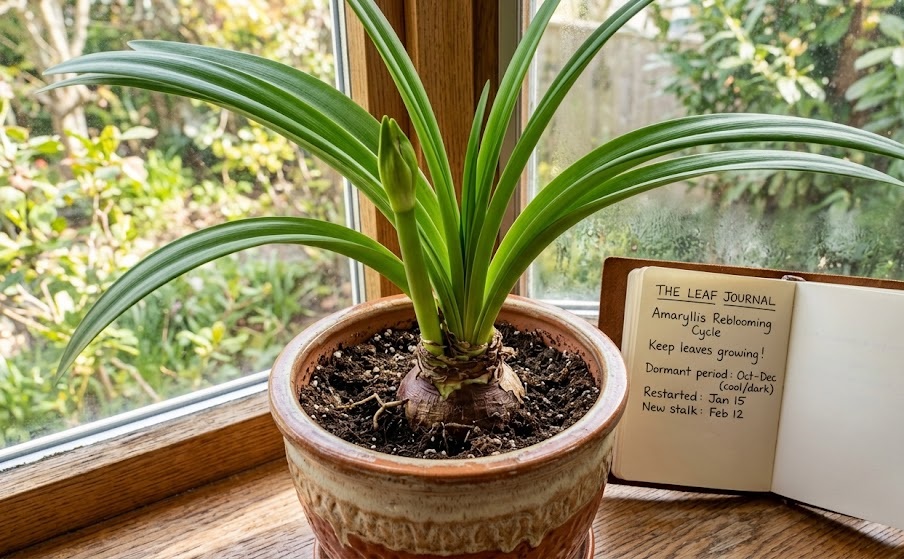
Reblooming begins the moment the show ends. Once a flower wilts, cut the individual bloom off, and when the whole stalk yellows, cut it back to about an inch above the bulb. What you must not cut are the long, strappy leaves. Those leaves are the entire point of the coming months, because through them the plant gathers energy and stores it in the bulb for next year’s flowers. Keep them, and you keep the possibility of another bloom.
The Growing Season Is Where the Magic Happens
From spring through summer, the amaryllis is not resting, it is working. Give it bright light, water it when the top of the soil dries, and feed it regularly with a balanced fertilizer to fuel all that leaf growth. This is the stage that decides whether you get flowers next time, because a bulb that fattens up over a good growing season has the reserves to bloom, while a starved one does not. If you want the finer points of feeding, light, and watering, caring for amaryllis bulbs covers the whole routine in more detail.
The Rest It Cannot Skip
Here is the step most people miss, and the reason their amaryllis never reblooms: the bulb needs a dormant rest before it will flower again. In late summer or early fall, stop watering and move the plant somewhere cool and dark, around fifty to sixty degrees, for roughly eight to ten weeks. The leaves will yellow and die back, and that is exactly what should happen. Let them, remove them once they are spent, and let the bulb sleep. This enforced rest is what triggers the next round of flowers.
Climbing Hydrangea: Unpacking the ‘Low-Maintenance’ Myth for 2026
Waking It Up Again
After its rest, bring the bulb back into the light and warmth, refresh the top layer of soil or repot it if it is crowded, and water it well to signal that the growing season has begun again. Within a few weeks you should see a new flower stalk pushing up, and roughly six to eight weeks after you restart it, the trumpets open once more. That first new bud after months of patience is genuinely thrilling, proof that the bulb had another show in it all along.
Timing It for the Holidays
Because you control when the rest ends, you can time the blooms. Count back about eight weeks from when you want flowers, and that is when to bring the bulb out of dormancy and start watering. Restart it in late October or early November and you can have those dramatic blooms open right around the holidays, year after year, from the very same bulb you were once tempted to throw out.
A Few Things That Trip People Up
Most reblooming failures come down to a small handful of mistakes, and they are easy to avoid once you know them. Cutting off the leaves after flowering starves the bulb and guarantees no encore, so always let them grow on. Skipping the dormant rest is the other big one, because without that cool, dry pause the bulb simply will not set new flowers no matter how well you feed it. Keeping the plant warm and watered all year round leaves it lush but stubbornly bloomless. And a bulb buried too deep or lost in an oversized pot tends to sulk, so plant it snugly with the top third sitting proud of the soil. Steer around those few missteps and reblooming becomes genuinely reliable.
Give the Bulb the Right Pot
One easily missed detail makes reblooming far more reliable: the pot. Amaryllis actually prefer to be a little snug, with only an inch or so of space around the bulb, because an oversized pot holds extra soil that stays wet and invites rot in the very bulb you are trying to protect. Every few years, once the bulb has clearly outgrown its home or small offset bulbs have crowded in beside it, refresh the soil and move up just a single pot size. The rest of the time, leave it be. A settled bulb in a snug pot flowers far more willingly than one that is constantly repotted and disturbed.
An amaryllis rewards a little patience more generously than almost any plant on the windowsill. Learn its yearly rhythm once, and you trade a single fleeting bloom for a lifetime of them. For more guides to getting the best from your flowering plants, you are welcome to visit The Leaf Journal.